
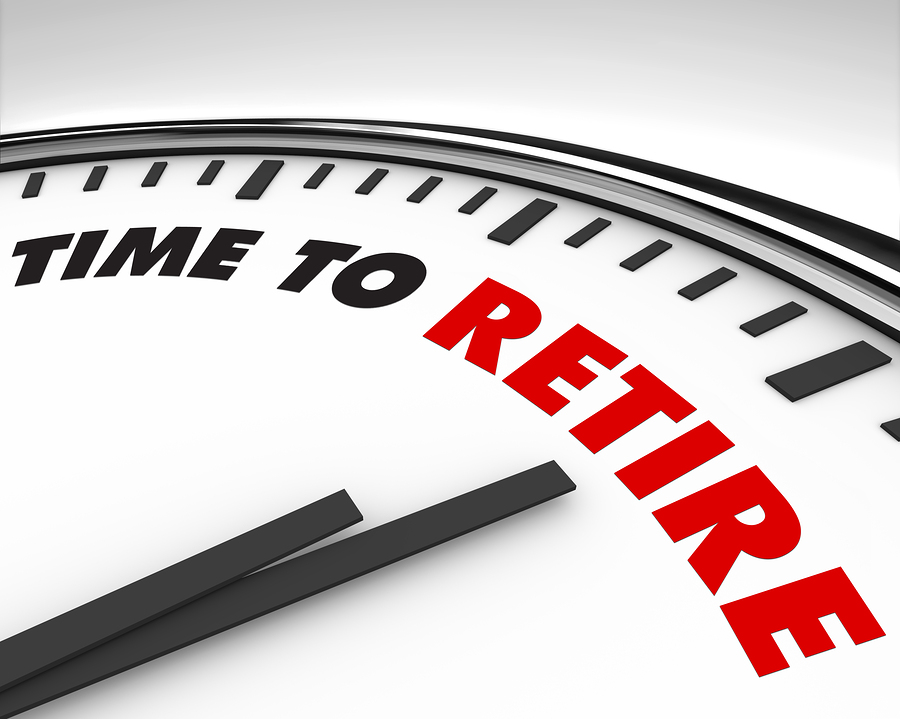
Many factors influence your retirement age, such as your health, lifestyle and goals. With better access to health care and an ever-increasing life expectancy, it is now possible to retire at a later age than ever before.
Retirement is a very personal and delicate decision. One of the most important things you can do for yourself before you decide when to retire is to think about how much money it will take to live the life you want and then make sure that your workplace retirement program plus your Social Security retirement pension meet your needs.
If you have a fear of aging, then retiring early might be appropriate. If you want to spend more time with family and friends or pursue an entirely different lifestyle that the rat race of an office job requires, then retiring in your 50s might be ideal.
The best age to retire depends on several factors such as:
Your health:
If you’re not in good health and can’t work anymore, then this may limit your ability to earn money and support yourself financially.
Your financial situation:
If your debts are high or if your savings have not been invested properly, then this could affect when you should retire because there might not be enough money coming in each month to cover all expenses.
Some people cannot wait to get out of the workforce, while others enjoy their job so much that they want to keep working even after they hit retirement age.
For those who are thinking about quitting their jobs, here are some scenarios to consider:
1) You will have more time for yourself and your family.
If you are passionate about traveling or spending more time with loved ones, retirement gives you the freedom to do just that.
2) You won’t be stuck in a job you hate anymore.
If your current job is not fulfilling or satisfying, retiring means that you can pursue something that makes you happy instead of being stuck in an unsatisfying situation forever.
3) You will save money on taxes (if you don’t make too much).
If your tax bracket drops significantly when you stop working full-time, then it may make sense to retire early — especially if your income puts you in a higher tax bracket now than it will when you’re retired.
Qualifying for Social Security benefits at age 62 is one of the biggest factors affecting your retirement timeline. If you retire early, you will get smaller monthly payments than if you wait until full retirement age (67 for those born after 1960). Delaying Social Security can also boost your payout. But if you are still working at that point, it is likely that delaying benefits will result in fewer years of payments than if you had started early and made them later on.
Let us consider a practical example of two persons. This is going to involve some complex math, so find yourself a quiet spot, grab a cup of coffee and read on. Bring along a calculator as well.
Mr. A and Mr. B both work for the same company, make roughly the same money (let’s say $65,000 a year) and have been working there for 35 years. They are good friends and both in good health. Both were born in 1960 and they are about to turn 62 this month. They agree on mostly everything, with the exception of when they should retire.
They both know the following facts:
Social Security’s full-benefit retirement age has increased gradually because of legislation passed by Congress in 1983. Traditionally, the full retirement age was 65, and early retirement benefits were first available at age 62, with a permanent reduction to 80 percent of the full benefit amount.
Currently, the Full Retirement Age (FRA) is 67 for those born in 1960 or later. Early retirement benefits will continue to be available at age 62, but they will be reduced to 70% of the full benefit, and benefits first taken at age 65 will be reduced to 86.7 percent of the full benefit.
There is a financial bonus for delayed retirement. An individual reaching the full-benefit age in 2022 (67 years old) receives a monthly benefit that is 8 percent higher for each year he or she delays collecting benefits until the latest claiming age of 70, at which point benefits are 124% of what they would have been at the normal retirement age. The maximum retirement benefit in 2022 for someone who waits until age 70 to collect benefits is $4,194 a month.
After much discussion and calculations, Mr. A decides to retire at age 62. Mr. B decides he wants the maximum Social Security pension amount and decides to retire at age 70.
Assuming they both live to the ripe old age of 90, here is how much each will be receiving, assuming a monthly benefit of $2,000 at FRA (Full Retirement Age) of 67 years for persons born in 1960 like Mr. A and Mr. B. We will also assume an inflation rate of 5% per year which will result in a COLA (Cost of Living Increase) of 5% each year.
For Mr. A – retiring at age 62, starting December 2022:
His pension will be reduced by 30% due to his early retirement.
- Therefore, he will receive $2,000 – 30% = $1,400 in Year 1, rising by 5% each year, compounded annually,
until age 90 (that’s 28 years).
- We have used this calculator for getting the figures below:
https://www.thecalculatorsite.com/finance/calculators/compoundinterestcalculator.php
Initial deposit: $1,400.00
Interest rate: 0% yearly
Time: 28 years
Deposits: $1,400.00 monthly
COLA increase: 5% yearly
Compounding: Yearly
Future investment value: $982,566.92
Total interest earned: $0.00
Initial balance: $1,400.00
Additional deposits: $981,166.92
So, Mr. A accumulated a total of very close to $1 million by the time he passed away at age 90.
Now let us see how Mr. B fared.
Before we start, we must take into consideration certain factors:
- His Full Retirement Age (FRA) pension is 24% higher at age 70 than it would have been at age 67.
- In 2022, when he is 62, his FRA would have been $2,000. However, we need to add 5% COLA (Cost of Living Increase) each year for 5 years to get to the FRA pension at age 67. This works out to $2,553/month.
- On top of that, we need to add another 3 years (from 67 to 70) to obtain his pension amount (including the 5% COLA increase). This gives us a total of $2,955.
- Finally, we need to add 24% to that amount because Mr. B is retiring at age 70 and the Social Security Administration is giving him a 24% increase in his pension to thank him for his patience. This gives us a monthly pension of $3,664.
With this in mind, let’s work out how much he will get until age 90 (20 years), always assuming a COLA increase of 5% annually:
Initial deposit: $3,664.00
Interest rate: 0% yearly
Time: 20 years
Deposits: $3,664.00 monthly
COLA increase: 5% yearly
Compounding: Yearly
Future investment value: $1,457,508.64
Total interest earned: $0.00
Initial balance: $3,664.00
Additional deposits: $1,453,844.64
On paper, Mr. B seems to be the clear winner.
However, from our experience, the chances of someone living to age 90 and remaining in perfectly good health to be able to enjoy their massive pension are slim at best.
It is more likely that after age 80, on average, a person’s health deteriorates to an extent that traveling, and other leisure activities, are not deemed appropriate and may even be dangerous.
Additionally, one needs to consider the following:
- Mr. A received a full 8 years pension (age 62 to 70) before Mr. B got a cent from his pension.
- If one calculates the amount Mr. A received during those 8 years, the result is $160,425.
- This means that Mr. B had to wait a certain amount of time to play catchup with Mr. A.
- Assuming an average monthly pension of $3,950 per month, Mr. B needed $160,425 / $3,950 or approximately 40 months (3 years and 4 months) to break even with what Mr. A would have received by the time he (Mr. A) turned 70.
To make a long (and complicated) story short, we are of the opinion that one would do well to consider applying for his/her Social Security pension as early as possible, even though in the long run the amount received might be less than if s/he had waited.
Nothing in life is guaranteed. This is especially true after a certain age, when we all are more prone to accidents, like falling, a reduction in reflex response, reduced mobility, deteriorating sight and hearing, and so on.
We think that it’s better to enjoy a smaller pension in your ‘younger’ pension years (early 60s to early 70s) than waiting until you are in your late 60s or even 70 to retire.
——————————————————————————————————————————————————————–
Newsletter information
We publish a monthly Newsletter. The October issue is also online. It contains a trove of useful information.
It will be free until December 2022, and then by subscription only.
Please send us an email on info@taxandpension.com to make sure that you receive a notice that a new Newsletter issue has been published.
We also have a Blog and News section. They will be constantly updated to keep you on top of the latest tax and pension news and any other news that we feel is of interest to you.
Finally, we would like to thank you for your support and we look forward to serving you. If you have any questions or feedback, please do not hesitate to contact us.
Thank you for visiting taxandpension.com, and we hope to see you again soon! We look forward to serving you in the future.


Leave A Comment